A bathroom sewage backup or toilet overflow isn’t just an unexpected inconvenience; it is one of the most hazardous property emergencies a homeowner can face. When sewage or category 3 water breaches your plumbing and backs up into sinks, tubs, or toilets, the clock starts ticking on severe property damage… and health dangers.
According to the U.S. Environmental Protection Agency, between 23,000 and 75,000 sanitary sewer overflows occur annually across the United States. This alarming statistic highlights just how common and serious sewage losses truly are.
This raw sewage introduces dangerous pathogens, harmful bacteria, and immediate structural risks that threaten both your family’s health and your property’s integrity. Because of the extreme biological hazards involved, you cannot afford to wait. You must act immediately, decisively, and strategically to contain the contamination and prevent long-term damage.
If you find yourself facing this overwhelming crisis, knowing what to do in the first few moments can save your home from devastating consequences. Read on to discover the immediate, essential steps you must take to protect your home from a bathroom sewage loss and why the specific details of the loss matter for your insurance claim.
Sewage Backups vs Toilet Overflows
All sewage losses are messy, but there is an important distinction between an actual sewer backup and a toilet overflow.
Many homeowners call a restoration company or their insurance carrier and say they have a “sewer backup” because they see sewage or Category 3 water on their bathroom floor. However, what homeowners often don’t know is that a true sewer backup actually means the municipal sewer system has backed up and sewage has entered the home through floor drains or plumbing fixtures. When this happens, the local municipality or city is typically responsible for the cost of repairs, or you may need to pay out of pocket.
A toilet overflow, on the other hand, is often caused by a localized or temporary blockage in the home’s own drain or sewer line. While this can still result in sewage contamination and requires professional remediation, it is not considered damage caused by the city’s sewer system but by a blockage within the sewer line.
This type of loss, the town you live in would not be responsible, and your insurance company may cover the cost of repairs. The reason this matters is that your insurance company does not insure the rest of the city or town you live in; they only insure your property. So they may not be responsible for damages caused by the public sewer system itself.
Because the cause of loss matters, it is important to involve a licensed plumbing professional to determine how the backup or overflow occurred. In many cases, an insurance adjuster will request a plumbing invoice or report to verify the source of the sewage and how the damage happened. This is a very common request when evaluating a sewage-related insurance claim.
How the Professionals (Like Us) Actually Clean Up a Sewage Disaster
When our team at FastPro Restoration walks through your front door after a sewage backup or toilet overflow, we know exactly what is running through your mind. You are stressed, you are exhausted, and you just want your home back to normal as quickly as possible. Because we are dealing with Category 3 water, which is heavily contaminated black water packed with dangerous pathogens, we do not just grab a mop and hope for the best.
We follow a highly structured, thorough restoration plan to ensure your house is safe and structurally sound again. The very first thing we do is step back and assess the entire situation. We put on our protective gear and figure out exactly how far the contaminated water has traveled.
We track the moisture, pinpoint exactly where the nasty backup originated, and create a targeted plan of attack to stop the problem at its source. We do not want to just clean up the mess; we want to make sure we understand the full scope of the damage before we get to work.
Once we have our plan, it is time to get that gross water out of your house as fast as humanly possible. We bring in some serious heavy machinery for this part. Using commercial-grade extraction pumps and specialized heavy-duty vacuums, we extract all the standing wastewater. Getting the standing solids and liquids out quickly is crucial because the longer that contaminated water sits on your floors, the more damage it does to your home’s foundation and the higher the risk for severe mold growth.
After the water is gone, we have to make some tough calls about the materials in your bathroom. Because Category 3 water is so incredibly dangerous, anything porous that soaked it up usually has to go. This means we carefully tear out the affected drywall, pull up the contaminated carpeting, and remove the ruined insulation. It might look a bit messy for a moment, but removing these soaked, porous materials is the absolute only way to guarantee that microscopic bacteria and toxic mold do not start growing inside your walls a few weeks from now.
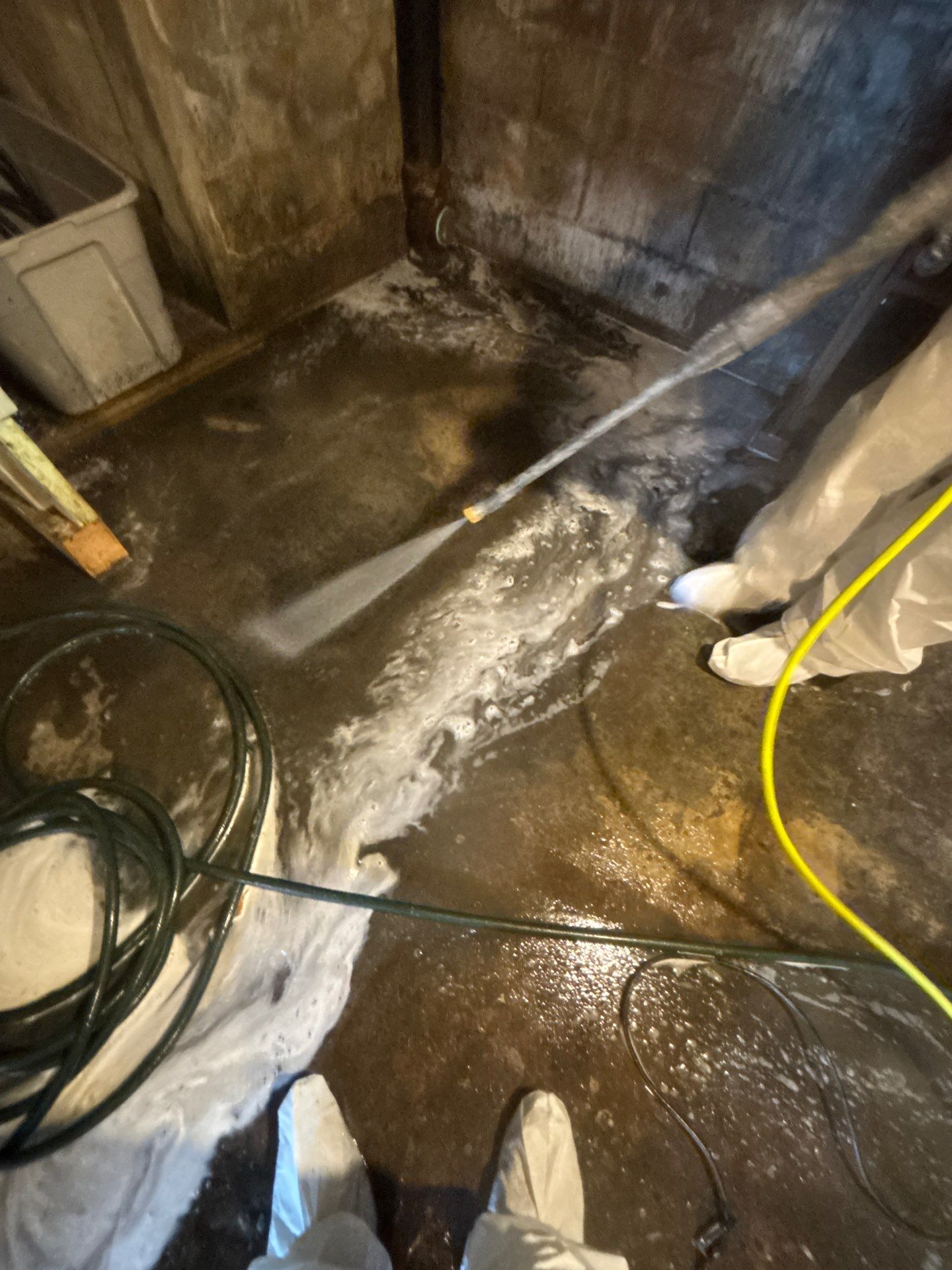
With the damaged materials out of the way, we move into the deep cleaning and sanitization phase. This is where we bring the big guns to fight the invisible threats. We completely saturate every single exposed surface with powerful, EPA-grade disinfectants. We meticulously scrub the area to eliminate any lingering bacteria, viruses, and parasites left behind by the raw sewage. This intense sanitization process also completely neutralizes those terrible, foul odors, making your house actually smell like a home again instead of a city sewer.
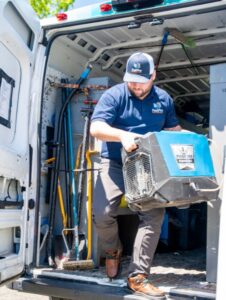
Even though the area looks clean and smells fresh at this point, our job is not done. The structure of your home is likely still holding onto some deep, hidden moisture. To fix this, we set up an array of high-powered air movers and commercial-grade dehumidifiers. We leave this equipment running to pull every last drop of moisture out of the air and the surrounding wood framing. This dedicated drying phase is your ultimate insurance policy against future mold development.
Finally, we get to the best part of the process: putting your life back together. We restore the damaged areas entirely, handling repairs to your flooring, installing brand-new drywall, and replacing any damaged bathroom fixtures. By the time we pack up our trucks and say goodbye, your bathroom will look just as beautiful as it did before the disaster struck, and more importantly, it will be completely safe for your family to use.
How to Catch the Early Signs of a Sewage Overflow
Nobody wants to spend their evening thinking about raw sewage. It is gross, it is stressful, and it is the last thing you want to deal with after a long day. But catching a plumbing disaster before it fully unleashes in your bathroom is one of the smartest things you can do as a homeowner.
Spotting the problem early on gives us a massive head start. It helps you keep damage to an absolute minimum and protects your family from some pretty nasty health risks. Your house actually gives you plenty of hints before a full-blown disaster strikes. You just need to know what to listen to, look at, and, unfortunately, smell.
Let us walk through the subtle warning signs your plumbing is waving at you so you can catch a sewage overflow before it actually happens.
Listen to What Your Pipes Are Telling You
Your plumbing system is usually pretty quiet when everything is working the way it should. So, when it starts making strange noises, you should definitely pay attention. One of the most common early signs of a backup is a weird, hollow gurgling sound coming from your drains.
You might hear it right after you flush the toilet, or perhaps when the water is draining out of your bathtub. This bubbling sound happens because trapped air is trying to push its way past a blockage in the pipes. If your drains sound like they are trying to talk to you, they are probably asking for help.
Notice the Slow Drains
We have all dealt with a slow drain at some point. Usually, it is just a bit of hair caught in the shower grate or toothpaste buildup in the bathroom sink. But if you clean out the surface debris and the water is still taking forever to go down, you might be looking at a much bigger problem.
When wastewater struggles to leave your home, it indicates a significant blockage deeper in your system. Instead of flowing smoothly out to the main sewer, the water hits a wall and slowly seeps past it. Pay close attention if your sink, tub, or toilet suddenly loses its draining speed.
Trust Your Nose
Sometimes your eyes and ears will miss the early warning signs, but your nose definitely will not. A persistent, foul odor hanging around your bathroom drains is a massive red flag. We are not talking about the smell of a damp towel or everyday bathroom odors.
This is a very distinct, unpleasant sewer gas smell that just will not go away, no matter how much bleach or air freshener you use. When a blockage is holding up wastewater, the nasty gases from that stagnant waste have nowhere to go but back up through your drains and into your home.
If your clean bathroom smells like a swamp, trust your gut and get it checked out.
Watch for Water In Places It Shouldn’t Be
One of the most undeniable signs of a looming sewage overflow is water backing up into places it has no business being. You might run your bathroom sink and suddenly notice a little dirty water creeping up through the bathtub drain.
Or maybe you flush the toilet and see water bubbling up in the shower. You might even spot small puddles of visible wastewater pooling around the base of your bathroom fixtures. This happens because the water you are trying to flush away hits a blockage and simply takes the path of least resistance right back into your house.
The Ultimate Red Flag: The Main Sewer Line Issue
Here is the biggest secret to understanding your home plumbing. If just your bathroom sink is acting up, you probably just have a localized clog right under that specific drain. But if multiple fixtures start throwing a fit at the exact same time, you have a much bigger situation on your hands.
Think of your home plumbing like a tree. Your sinks, showers, and toilets are all small branches that eventually connect to the thick trunk, which is your main sewer line. If that main sewer line gets blocked by tree roots, heavy buildup, or a collapsed pipe, everything in the house suffers.
When you flush the toilet and your shower drain starts gurgling while the sink backs up, it strongly indicates that the main sewer line is entirely compromised. This is the moment you need to drop everything and call in the pros before raw sewage decides to make an appearance on your bathroom floor.
What to Do Next
Do not panic. Take a deep breath. The best thing you can do is stop running the water, avoid flushing the toilets, and bring in an expert to assess the situation.
Here at FastPro Restoration, we have seen it all, and we know exactly how stressful these moments can be. We treat your home like it is our own, stepping in quickly to find the blockage, clean up any messes, and get your plumbing back to normal.
If you are seeing the signs, call us, or if you want to read a bit more, then check what’s coming next.
Stop Your Water Usage Immediately
The absolute first thing you need to do when you notice a sewage backup is to stop adding any more water to the situation. We know it sounds obvious, but in a moment of panic, it is incredibly easy to accidentally wash your hands, flush a toilet, or leave the washing machine running.
Right now, your home’s plumbing system is completely overwhelmed and backed up. Because the water has nowhere to go down the drain, any new water you introduce will just get pushed right back up into your living space. By simply turning off the water, you instantly pause the pressure in your pipes.
If you know exactly where your home’s main water shutoff valve is located, go ahead and turn it off completely. If you are not sure where the main valve is, just make absolutely sure no one in the house uses any sink, shower, or appliance that requires water.
Buying yourself this time prevents a bad mess from turning into a total disaster.
Keep Your Distance from the Contamination
It is human nature to grab a mop and start cleaning your house the second you see a mess. We strongly ask you to fight that urge right now. The water backing up from your pipes is not just dirty bathwater; it is raw sewage.
This means it is highly contaminated and packed with dangerous pathogens, including harmful bacteria, viruses, and parasites that can make you and your family incredibly sick. Because of these serious health hazards, you need to avoid any direct physical contact with the water. Keep your shoes on, do not let the wastewater touch your bare skin, and absolutely keep your kids and pets far away from the area.
If possible, simply shut the bathroom door to create a physical barrier between the contaminated area and the rest of your home. Leave the heavy cleaning and sanitizing to professionals who have the right protective gear.
Why a Sewage Backup is So Much More Than a Plumbing Problem
When a pipe bursts and sprays clean tap water all over your bathroom floor, it is certainly a massive headache. You have to dry out the floorboards, wipe down the baseboards, and maybe run a dehumidifier for a few days.
But when you are dealing with a sewage overflow, you are facing an entirely different beast. This is not just a frustrating plumbing problem. It is a severe biohazard that requires extreme caution. In the restoration industry, we classify a sewage backup as a Category 3 water damage event.
You might also hear professionals call it black water. What that means is that the water is heavily contaminated with gross, dangerous materials that can make humans and pets incredibly sick. Category 3 water contains raw human waste, harsh chemicals, and a massive concentration of dangerous pathogens.
Because of exactly what is floating around in that water, you simply cannot treat it like a regular spill. The stakes for your family’s health are just too high.
The Hidden Health Dangers Lurking in the Water
It is easy to look at a puddle of dirty water and underestimate just how much damage it can do to your body. The reality is that raw sewage is essentially a microscopic zoo of harmful bacteria, aggressive viruses, and nasty parasites.
If you or your loved ones are exposed to this environment without the right protective gear, the health consequences can potentially be severe.
Stomach Bugs and Gastrointestinal Infections
One of the most immediate and common risks of being around a sewage overflow is developing a severe gastrointestinal infection. The water backing up into your home is loaded with dangerous bacteria like E. coli and Salmonella, along with various parasites.
You do not even have to swallow the water to get sick. Simply touching a contaminated surface and then accidentally touching your face, mouth, or food is enough to transfer these nasty bugs into your system.
These infections can lead to intense stomach cramping, nausea, and severe dehydration, which is especially dangerous for young children and older adults living in your home.
Breathing Troubles and Respiratory Issues
You will definitely smell a sewage backup before you fully understand the scope of the problem. That overwhelming, foul odor is not just unpleasant to live with. Those fumes actually carry aerosolized particles and toxic sewer gases directly into the air you are breathing. Inhaling these airborne contaminants can deeply irritate your lungs and respiratory tract.
If someone in your family already struggles with asthma, allergies, or a compromised immune system, breathing in this toxic air can quickly trigger severe asthma attacks, chest tightness, and lingering respiratory infections.
Skin Irritation and Severe Infections
Your skin is your body’s first line of defense, but raw sewage can easily bypass it.
If that contaminated wastewater splashes onto your bare legs or you try to clean it up without wearing heavy-duty, waterproof gloves, you are putting your skin at serious risk. The high levels of bacteria and harsh chemicals in the waste can cause immediate and painful skin irritation, rashes, and hives.
Even worse, if you have a tiny scratch, a paper cut, or a scraped knee, that dirty water can introduce aggressive bacteria directly into your bloodstream, leading to severe and painful skin infections that require immediate medical attention.
The Lingering Threat of Toxic Mold
The immediate threat of bacteria and viruses is terrifying enough, but a sewage backup also brings a long-term threat right into your bathroom. Mold absolutely thrives in damp, dark environments, and it absolutely loves to feed on the organic materials left behind by a sewage spill.
If contaminated water seeps into your drywall, soaks through your bathroom vanity, or gets trapped under your flooring, toxic mold can start growing in as little as 24 to 48 hours. Long-term exposure to this kind of toxic mold can cause chronic headaches, persistent coughing, severe allergic reactions, and fatigue that lasts for months.
Why You Need Specialized Handling and Sanitation
Because we are dealing with a Category 3 biohazard, a mop, a bucket of bleach, and a stack of paper towels are simply not going to cut it. Cleaning up a sewage overflow is not a weekend DIY project that you can improvise, thinking the little equipment you bought from Lowe’s or Home Depot will work just fine.
It requires a highly process-driven, professional approach to ensure that every single pathogen is eradicated from your home. We approach every sewage emergency with the utmost care to protect your family.
This means our technicians arrive wearing specialized personal protective equipment, including heavy-duty suits, gloves, and respirators. We use professional-grade extraction machines to safely remove blackwater without spreading it further throughout your home. Once the visible water is gone, we apply hospital-grade disinfectants and antimicrobial treatments to completely destroy lingering bacteria, viruses, and parasites.
Our goal is not just to make your bathroom look clean again. Our goal is to deeply sanitize the affected area, purify the air, and restore your home to a completely safe, healthy environment so you can finally take a deep breath and relax.
Common Causes of Sewage Backup and Toilet Overflow in Bathrooms
Understanding the root causes helps prevent future incidents. A sewage loss often results from:
The Everyday Blockages Choking Your Main Sewer Line
To really understand why sewage damage happens, we first need to talk about your main sewer line. Think of your home plumbing like a giant funnel. Every single drain in your house, from your kitchen sink to your upstairs shower and your downstairs toilet, eventually empties into one large, central pipe buried out in your yard.
This central pipe is your main sewer line, and its only job is to carry all the wastewater away from your house and out to the city sewer or your septic tank. Because every drain connects to this one exit route, it takes on a massive amount of traffic. Over time, things that have absolutely no business going down the drain end up inside that pipe. Hot bacon grease poured down the kitchen sink is a huge culprit. It goes down as a warm liquid, but as soon as it hits the cool underground pipes, it hardens into a thick, sticky sludge.
Then, you throw in so-called “flushable” wipes, which honestly do not break down like toilet paper does. These wipes stick to the grease, catching other debris like hair and food scraps. Eventually, this sticky mess forms a massive, solid roadblock inside your main line. When your wastewater hits that solid wall, it has nowhere left to go but backward, pushing raw sewage right back up through the lowest drains in your home.
Thirsty Tree Roots Breaking Into Your Plumbing
It might sound crazy that a tree in your front yard could destroy the bathroom inside your house, but tree root intrusion is actually one of the most common causes of massive plumbing disasters. Trees are incredibly smart, and their roots are constantly searching underground for three specific things: water, oxygen, and nutrients.
Your sewer line happens to be an absolute goldmine for all three. As the ground naturally shifts over the years, microscopic cracks can form in your underground pipes. Warm water vapor escapes through those tiny cracks, and tree roots track that moisture right back to the source. Even hair-thin roots can force their way inside the pipe. Once they get in, they find a constant supply of water and fertilizer.
The roots grow rapidly, expanding into thick, heavy clusters that act like a giant net. This root net catches all the toilet paper and waste trying to pass through, eventually choking off the pipe entirely. The water gets trapped behind the roots, builds up pressure, and forces a nasty backup right into your bathroom.
The Silent Breakdown of Aging and Damaged Pipes
If you live in an older, historic neighborhood, your home might be full of incredible charm, but it could also be hiding a ticking time bomb underground. Pipes simply do not last forever. Houses built a few decades ago were often fitted with pipes made from clay, cast iron, or Orangeburg material. While these materials were the standard back in the day, we now know they break down over time.
Cast iron pipes rust and corrode from the inside out, creating jagged edges that catch debris and cause massive clogs. Clay pipes become incredibly brittle and can easily crack or shatter as the surrounding soil expands and contracts with the changing seasons. Eventually, these aging, weakened pipes can collapse under the weight of the overlying soil. When a pipe caves in, the entire exit route is instantly shut down.
The waste you try to flush away literally hits a collapsed wall of dirt and broken pipe, forcing all that highly contaminated wastewater to turn around and flood your bathroom floors.
When Heavy Rainfall Overwhelms the City System
Sometimes you do everything exactly right. You never flush wipes, you keep grease out of the sink, and your pipes are brand new. Yet, you still find yourself standing in front of a completely flooded bathroom. In these intensely frustrating situations, the culprit is often heavy rainfall and massive storms.
When a severe storm drops a massive amount of water in a short period, all that stormwater rushes directly into the municipal sewer systems. City sewers are huge, but they still have limits. When the volume of storm runoff exceeds what the city pipes can handle, the system becomes completely overwhelmed.
Because all the water is interconnected, that massive pressure forces the excess water backward into the residential pipes connected to the city line. This pushes highly dangerous Category 3 water—heavily contaminated blackwater filled with street runoff, chemicals, and raw human waste—right back into your home.
It is a completely overwhelming situation because the problem starts totally outside of your property line.
The Downfall of Bad Plumbing and Improper Installation
Gravity is the absolute best friend your plumbing system has. When a home is built, the pipes must be installed with a very specific, carefully measured downward angle. Plumbers call this the slope or the pitch of the pipe. This downward slope allows wastewater to flow smoothly away from your house without getting stuck. However, if someone attempted a weekend DIY plumbing project or the original contractors rushed the job, those pipes might be lying completely flat or even sloping slightly upward.
When pipes lack the correct downward angle, the heavy waste simply cannot travel. The water might slowly trickle out, but the solid waste gets left behind, resting heavily in the bottom of the pipe. Day after day, that solid waste piles up, forming a dense, immovable blockage. Without the natural pull of gravity to keep things moving, the system stalls, sending the next flush right back up to say hello.
So, if any of the above happens to you, you will want to talk to a real restoration company, and here is why.
Keeping the Nightmare From Happening Again
Going through a sewage overflow is an incredibly traumatic experience for any homeowner, and once you get through it, your main goal is to make absolutely sure you never have to deal with it again. The good news is that taking a few proactive steps can massively reduce your risk of another catastrophic plumbing failure. Preventing a sewage backup is entirely about staying one step ahead of your pipes.
The easiest place to start is with routine drain maintenance. Just like you change the oil in your car to keep the engine running smoothly, your home plumbing needs regular check-ups. Having a professional come out occasionally to clean and inspect your drains is incredibly smart. It clears out the tiny, everyday clogs before they have the chance to merge together into a massive, impenetrable roadblock deep inside your main line.
You also have a huge amount of control over what actually goes down your pipes on a daily basis. Proper waste disposal is arguably the most important habit you can build. Make a strict rule in your house that nothing goes down the toilet except toilet paper and natural waste. This means completely banning so-called flushable wipes, heavy paper towels, feminine hygiene products, and massive clumps of hair. In the kitchen, always wipe hot grease into the trash can instead of pouring it down the sink. Keeping these stubborn materials out of your pipes naturally keeps the water flowing exactly where it should.
If you want absolute peace of mind, consider scheduling a professional sewer line camera inspection. This amazing technology lets you spot early warning signs of trouble, such as tiny cracks, sagging pipe sections, or mild corrosion, long before they escalate into a complete system collapse.
Lastly, take a walk around your yard and look at where your trees are planted. Tree root management is a massive part of protecting your underground pipes. If you have large, thirsty trees growing directly over or very close to your main sewer line, you will eventually have a root intrusion problem. Having a professional manage those roots, or occasionally removing problematic trees altogether, completely removes the threat of roots crushing your pipes and causing a devastating backup.
Keeping the path clear outside ensures your plumbing stays clear inside.
Wrapping It All Up
Time is absolutely your biggest asset in an emergency, so never hesitate to take those immediate safety steps and call a professional restoration company.
We highly encourage you to take a proactive approach with your home plumbing to protect your property. Keep a close eye on what your family is flushing, schedule occasional drain cleanings, and never ignore a sink or tub that takes entirely too long to empty. Simply paying attention to what your pipes are telling you will significantly reduce the chances of ever having to deal with a massive, catastrophic backup.
However, life is completely unpredictable, and sometimes plumbing failures happen even when you do everything exactly right. If you ever find yourself standing in front of a flooded bathroom, please know that FastPro Restoration is always here to support you.
We treat your home with the exact same care, respect, and urgency that we would treat our own. Our team is always ready to step into the mess, fully restore your property, and, most importantly, restore your peace of mind. Take a deep breath, keep our number handy, and remember that we are always ready to help you put the pieces back together.