Stormwater Cleanup Tips
How to Restore Your Home Quickly
Stormwater cleanup is one of those situations where every hour counts — and the decisions you make in the first few hours can have a major impact on how much damage you end up dealing with.
When severe weather hits, water doesn’t wait for a convenient moment. It finds its way fast, and it doesn’t discriminate. Floors, drywall, furniture, and personal belongings can all take a hit before the storm has even passed. What looks like surface-level damage on day one can quietly turn into something much more serious if it isn’t addressed quickly and correctly. According to NOAA, severe storms account for more billion-dollar disasters in the United States than any other weather category, contributing to hundreds of billions of dollars in property damage over the past several decades.
That’s why acting fast matters so much. Proper stormwater cleanup can mean the difference between a manageable restoration job and a costly, drawn-out repair process. The sooner moisture is dealt with, the better your chances of reducing overall repair costs, keeping mold from taking hold, and getting your household back to normal life as quickly as possible.
Prioritize Safety First
Before you touch anything, take a step back — your safety comes first.
Stormwater cleanup can feel urgent, and it is. But walking into a water-damaged home without checking a few critical things first can turn a bad situation into a dangerous one. A quick assessment before you start can make a real difference.
Here’s what to look out for before you step inside:
● Electrical hazards — water and electricity are a deadly combination. If there’s any chance the electrical system was exposed to flooding, don’t assume it’s safe.
● Structural damage — look for signs that the building itself may have been compromised. Sagging ceilings, buckled floors, or walls that look like they’ve shifted are all reasons to pause before going further.
● Contaminated water — stormwater is rarely clean. It can carry bacteria, sewage, and other hazardous materials that aren’t always visible.
Once you’re confident the space is safe to enter, gear up before you get to work. Protective gloves, waterproof boots, and eye protection aren’t optional — they’re your first line of defense against the contaminants that stormwater often brings in with it.
One thing that can’t be skipped: if floodwater reached any electrical outlets, appliances, or your home’s electrical panel, don’t restore power on your own. Contact a licensed electrician first and have them assess the situation before anything gets switched back on. It’s a step that’s easy to overlook in the rush to get things back to normal — and one that’s simply not worth skipping.
Remove Standing Water Immediately
The first thing you need to do — and the sooner the better — is get rid of any standing water in your home.
Every minute water sits on your floors and soaks into your walls, it’s doing more damage. What might be a manageable cleanup job today can turn into a much bigger problem tomorrow if the water isn’t removed quickly. Structural damage and mold growth both become significantly more likely the longer moisture is left to sit.
Use whatever you have access to — pumps, wet vacuums, or professional extraction equipment — to pull the water out as fast as possible. If the volume of water is beyond what household tools can handle, bringing in a professional restoration team with commercial-grade extraction equipment is well worth it. Getting the water out quickly is the single most important thing you can do to protect your home in the early hours after a storm.
Document Damage for Insurance
Before you start pulling out damaged materials or throwing anything away, grab your phone and document everything first.
It only takes a few minutes, but taking photos and videos of every affected area can make a significant difference when it comes time to file an insurance claim. Walk through the space and capture it all — flooring, walls, ceilings, furniture, appliances, personal belongings, anything that was touched by the water. The more thorough you are, the stronger your claim will be.
Good documentation gives your insurance adjuster a clear picture of what happened and the extent of the damage. That clarity can help move the reimbursement process along faster and reduce the back-and-forth that often slows things down.
Once you have your photos and videos, keep them organized and backed up somewhere safe. Pair them with any written notes about what was damaged, when the storm hit, and what steps you took right after. It might feel like extra work in the middle of a stressful situation, but solid records are one of the most valuable things you can have on your side when working through a stormwater cleanup and insurance claim.
Remove Wet Materials
Some materials don’t just get wet — they hold onto water in ways that make drying them out nearly impossible.
Carpet, carpet padding, drywall, insulation, and upholstered furniture are all highly porous, which means they can absorb large amounts of water during a storm. And the problem with porous materials is that once they’re fully saturated, simply running fans or a dehumidifier often isn’t enough to dry them thoroughly. Moisture hides deep inside, where airflow can’t reach it.
When that happens, removal is usually the right call. Leaving heavily saturated materials in place might seem like the easier option in the moment, but it creates a much bigger problem down the line. Wet porous materials become breeding grounds for bacteria and mold surprisingly quickly — sometimes within 24 to 48 hours of water exposure. By the time you can see or smell the problem, it’s already well underway.
It’s not a pleasant part of the cleanup process, but pulling out materials that can’t be effectively dried is one of the most important steps you can take to protect your home. Replacing carpet or drywall is manageable. Dealing with a widespread mold problem on top of the original storm damage is a much harder situation to come back from.
Dry the Structure Completely
Getting the water out is only part of the job. Drying the structure itself is just as important — and it’s one of the steps that’s easiest to underestimate.
Even after standing water has been removed and wet materials have been pulled out, moisture is still present. It’s absorbed into the framing, sitting inside wall cavities, and trapped in the subfloor. You can’t see it, but it’s there — and it will keep causing damage if it isn’t dealt with properly.
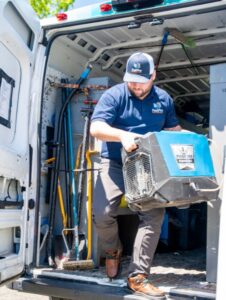
That’s why professional restoration teams bring in industrial-grade equipment to get the job done right. Industrial air movers push high-velocity airflow across surfaces to accelerate evaporation, pulling moisture out of materials and into the air. Dehumidifiers then capture that moisture from the air and remove it from the space entirely. Ventilation systems help keep air circulating throughout the home so the drying process reaches every area it needs to.
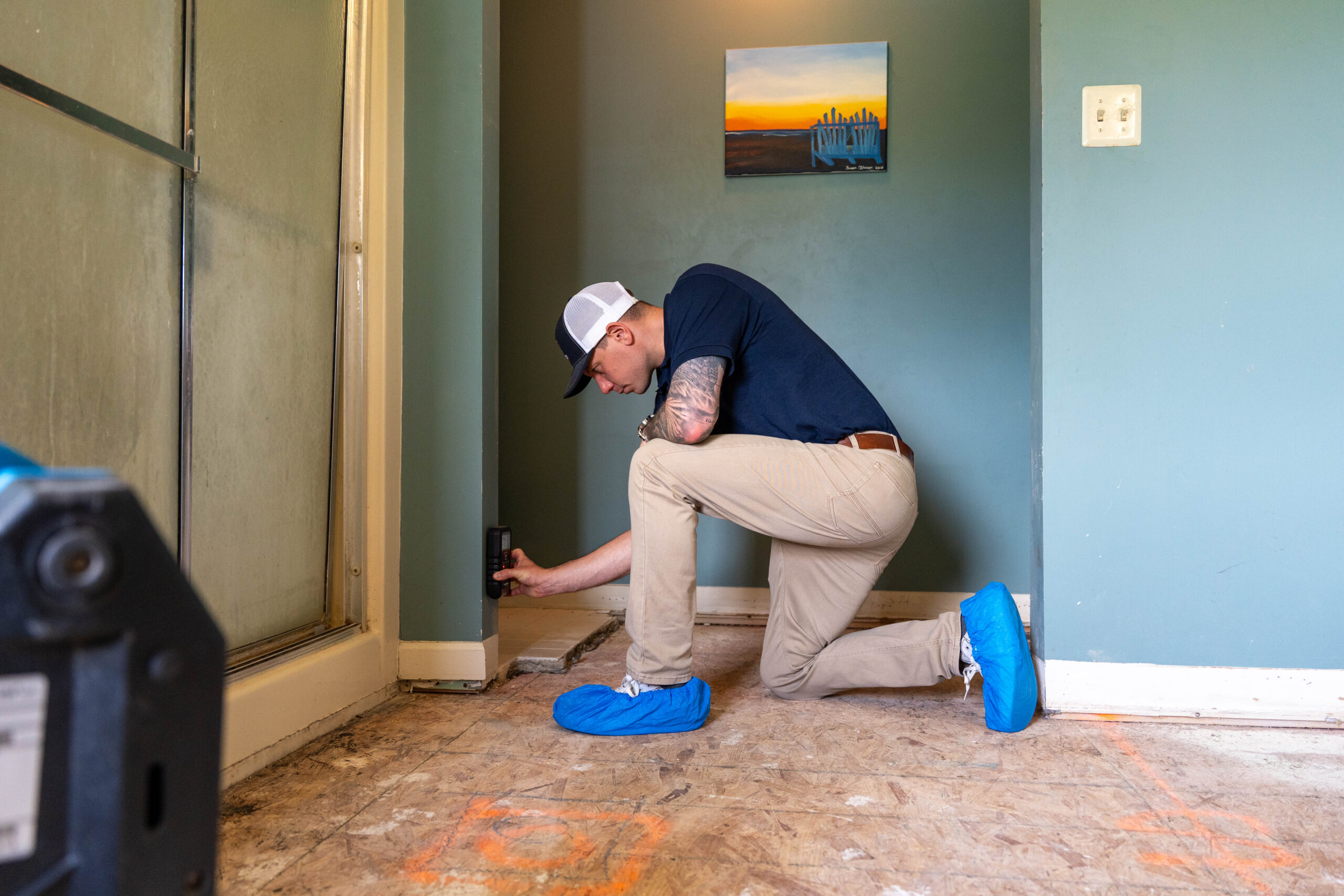
Running this equipment isn’t a guessing game, either. Restoration professionals use moisture meters to take actual readings from walls, floors, and structural framing throughout the drying process. This is what confirms that materials have reached acceptable moisture levels — not just at the surface, but all the way through. It’s the difference between a home that appears dry and one that actually is.
Skipping this step or cutting it short is one of the most common reasons water damage problems resurface weeks later. Thorough drying is what gives your home a clean foundation to move forward from.
Clean and Sanitize Affected Areas
Once the water is out and everything is dry, there’s still one more critical step before you can consider the cleanup done — and it’s one a lot of homeowners underestimate.
Stormwater isn’t clean water. By the time it makes its way into your home, it’s often picked up contaminants, bacteria, and debris from the ground, drains, and everything else it passed through along the way. That means any surface it touched needs more than just drying out — it needs to be properly cleaned and sanitized.
For hard surfaces — floors, walls, baseboards, countertops — use an appropriate disinfectant and apply it thoroughly. Don’t rush this part. Follow the product instructions, give the disinfectant time to do its job, and make sure you’re covering the full area that was exposed, not just the spots that look the dirtiest.
Some materials, though, simply can’t be safely cleaned once they’ve been soaked with contaminated water. Heavily saturated soft materials, porous items, or anything that absorbed stormwater and can’t be fully disinfected should be disposed of rather than kept. It’s a hard call sometimes, especially with items that have sentimental or monetary value — but holding onto materials that harbor bacteria puts your household at risk long after the storm has passed.
Thorough cleaning and sanitizing isn’t just the final step in stormwater cleanup. It’s what makes your home genuinely safe to live in again.
Check Indoor Air Quality
Most people focus heavily on what they can see during stormwater cleanup — the water, the damaged materials, the wet floors. But what’s happening in the air is just as important, and it’s easy to overlook.
Water damage doesn’t just affect surfaces. It can introduce airborne contaminants into your home that linger long after everything appears dry. Mold spores, bacteria, and other pollutants can circulate through your HVAC system and spread to areas that weren’t even directly affected by the flooding. That’s why checking your indoor air quality after a stormwater event is a step worth taking seriously.
Start with your HVAC system. Even if it wasn’t directly flooded, it may have been running during or after the storm, pulling contaminated air through the filters and into the ductwork. Replace the air filters as soon as possible — this is a simple step that makes a real difference in what your system is pushing back into the air you’re breathing.
If there’s any chance that floodwater actually entered the HVAC system itself — the air handler, ductwork, or vents — don’t stop at just replacing the filters. At that point, a professional duct inspection is worth scheduling. Contaminated ductwork can harbor mold and bacteria in places you can’t see or reach on your own, and having it professionally assessed gives you a clear picture of whether remediation is needed.
It’s a part of the cleanup process that’s easy to skip when you’re focused on everything else. But getting it right means the air in your home is actually safe — not just the floors and walls.
Inspect for Hidden Damage
Just because you can’t see damage doesn’t mean it isn’t there.
That’s one of the trickier parts of stormwater cleanup — a lot of the moisture that causes the most serious problems is hiding in places you can’t easily check without the right tools or knowledge. Surfaces can look and feel dry while moisture is quietly sitting in the subfloor beneath your feet, inside wall cavities, behind insulation, or within the structural framing itself.
And that hidden moisture doesn’t stay harmless. Left undetected, it continues to break down materials, weaken structural components, and create the damp, dark conditions that mold needs to thrive. By the time the damage becomes obvious, it’s usually already progressed further than it needed to.
That’s why a thorough stormwater cleanup doesn’t stop at what’s visible. Subfloors, wall cavities, insulation, and structural elements all need to be checked — not just wiped down or dried on the surface. If you’re not confident that hidden areas have been fully assessed, that’s a gap worth closing before you consider the job done.
Professional restoration teams use moisture detection equipment specifically designed to find what the eye can’t. Moisture meters and thermal imaging tools can measure what’s happening inside walls and beneath floors without tearing everything apart. If elevated moisture is found, targeted drying can address it directly — before it turns into a bigger problem down the road.
It’s one of those steps that’s easy to skip when things look fine on the surface. It’s also one of the steps that tends to matter most.
Call Restoration Professionals If You Don’t Want to Deal With the Above
There’s no shame in recognizing when a job is bigger than what you can reasonably handle on your own — and large-scale stormwater cleanup is often exactly that.
When flooding is significant, the scope of what needs to happen goes well beyond shop vacs and box fans. Professional restoration teams bring the specialized equipment and hands-on expertise to actually get the job done right. That means proper water extraction, structural drying, sanitizing affected areas, and ongoing moisture monitoring to confirm the home is fully recovered — not just dry on the surface.
The monitoring piece matters more than most people realize. It’s not enough to run equipment for a few days and assume everything is fine. Professionals track moisture levels throughout the process and don’t pack up until the readings confirm the job is complete. That’s a level of accountability that’s hard to replicate on your own.
There’s also a real advantage to calling sooner rather than later. The faster a professional team gets on-site, the faster water comes out, drying begins, and contamination is addressed. That speed directly limits how much long-term damage your home sustains — and in many cases, it’s the difference between a manageable repair and a much costlier one down the line.
If the stormwater damage in your home feels overwhelming, or you’re simply not confident the job can be done thoroughly without professional help, that instinct is worth listening to. Call FastPro for help.
Stormwater Cleanup - Frequently Asked Questions (FAQ)
How soon should stormwater cleanup begin?
Cleanup should begin as soon as it is safe to enter the property, ideally within 24 hours.
Can I perform stormwater cleanup myself?
Small incidents may be manageable, but significant flooding often requires professional restoration services.
How long does stormwater cleanup take?
Most projects take several days to a few weeks depending on the extent of damage.
Will my homeowner's insurance cover storm damage?
Coverage varies by policy. Contact your insurance provider to verify coverage details.
How quickly can mold develop after a storm?
Mold can begin growing within 24 to 48 hours in damp conditions.
What should I throw away after flooding?
Heavily saturated porous materials such as carpet padding, insulation, and some furniture may need disposal.
Is stormwater dangerous?
Yes. Stormwater can contain bacteria, chemicals, sewage, and other contaminants.
How do professionals dry a home after flooding?
They use water extraction equipment, air movers, dehumidifiers, and moisture monitoring tools.
Can water damage be hidden?
Yes. Moisture often remains behind walls, under flooring, and inside structural cavities.
When should I call a restoration company like FastPro?
Call immediately if there is significant water intrusion, contamination concerns, or potential structural damage.